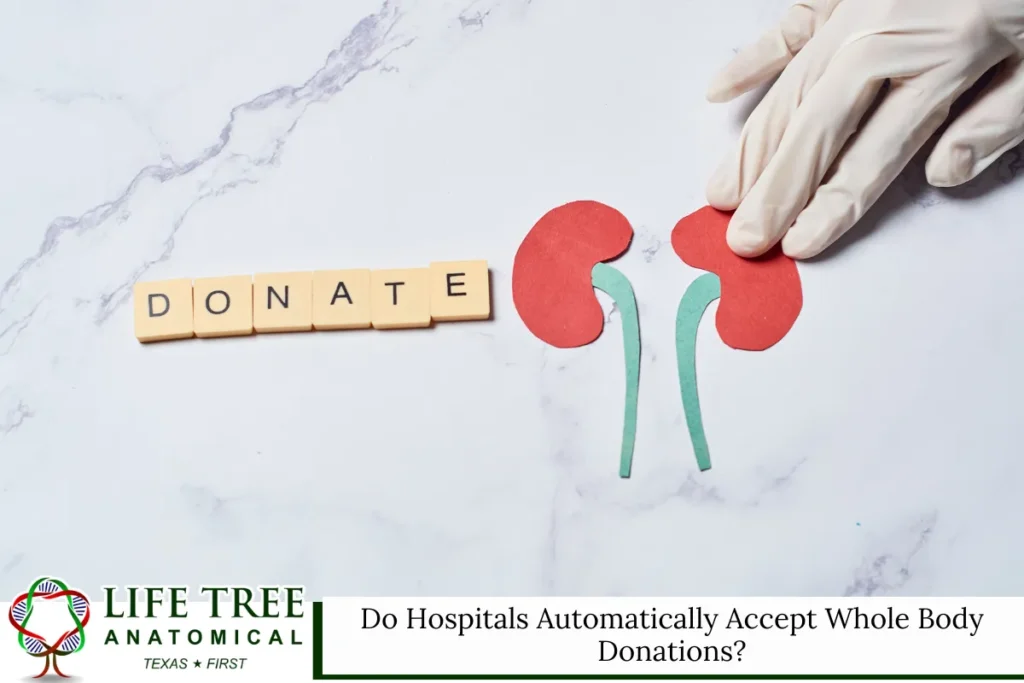
In Texas, the decision to donate your body to science is an incredibly generous gift that advances medical knowledge and supports the training of future physicians, ultimately benefiting human health. However, many people wonder: Do hospitals automatically accept a whole body donation? The truth is, hospitals generally do not accept whole body donations directly. Instead, they work with regional or statewide Willed Body Programs. These programs are responsible for accepting and processing body donations, ensuring that the body is used for educational and research purposes. If you wish to donate your body, you must pre-register with a recognized program such as Life Tree Anatomical.
Whole body donation requires careful planning, pre-registration, and the completion of specific legal and medical forms (completed forms) to ensure your wishes are followed and eligibility is established. This article will delve into the complexities of Texas whole body donation, the role of willed body programs, and the steps you need to take to donate your body to science. By understanding this process, you can make a life-changing contribution to medical research and education.
Understanding Whole Body Donation
What is Whole Body Donation?
Whole body donation refers to the act of donating an entire body, posthumously, for medical research, education, and scientific study. Unlike organ donation, where individual organs such as the heart, kidneys, or eyes are donated, tissue donation and eye donation are also options—these involve donating specific body parts or tissues, and are often coordinated separately from whole body donation. Whole body donation typically involves giving the entire body to a medical school for educational and research purposes, supporting anatomy studies and the advancement of medical knowledge. The main goal is to advance knowledge in fields such as anatomy, pathology, and even the development of new surgical techniques.
Why Do People Choose to Donate Their Bodies?
People donate their bodies for many reasons, including the desire to make an invaluable contribution to the advancement of medical science, provide indispensable aid in training future doctors, and further research into diseases and treatments. By donating their bodies, individuals offer indispensable aid and invaluable educational resources for medical students and professionals. Whole body donation, also known as willed body donation, is considered one of the most generous gifts a person can give, leaving a lasting legacy that advances healthcare and medical knowledge for future generations.
The Process of Donating Your Body to Science
Step 1: Registering for a Willed Body Program
To donate your body, individuals must complete all required forms, including a legal consent form often called a ‘Body Bequeathal Agreement.’ These completed forms require the original signature of the donor and should be witnessed by two adults. It is crucial to fill out the forms while still alive and ensure that they are properly notarized, as this legally binds the individual’s wishes to donate their body upon death. If the donor is unable to complete the forms, the legal next of kin may be required to authorize the donation after death.
Step 2: Informing Your Next of Kin
It is recommended that individuals inform their next of kin about their decision to donate their body. Providing them with copies of the completed donation forms helps ensure that their wishes are respected. Donor families play a crucial role in managing the final disposition of remains and may be involved in requesting the return of cremated ashes. In addition, by informing family members, it removes any confusion or emotional distress during the time of death.
Step 3: The Donation Process After Death
Once death occurs, the appropriate authorities or funeral homes should be contacted promptly to initiate the donation process. Funeral homes can assist with legal documentation and help coordinate transportation arrangements to the donation facility. The family or medical staff should also notify the designated donation program within 24 to 72 hours after death to ensure the body can be accepted for donation.
Step 4: Medical Education and Research
Once the body is received, it may be used for educational purposes or scientific research. Donated bodies are essential for training future physicians and advancing medical knowledge, as medical students study human anatomy, practice surgical techniques, or explore disease pathology using the body. Institutions such as the Texas A&M Health Science Center College of Medicine rely on these donations for their educational programs, supporting the development of future physicians and the advancement of medicine. The study of human anatomy is foundational to the practice of medicine, and the body might remain in the program for anywhere from 6 months to 5 years, depending on the institution’s research needs.
Read Texas Whole Body Donation: What Happens if Death Occurs While Traveling Abroad?
Whole Body Donation: Key Considerations in Texas
Willed Body Program vs. Organ Donation
It is important to note that whole body donation in Texas is distinct from organ donation. In organ donation, individuals donate specific organs to save lives, while in whole body donation, the entire body is used for research and education. Tissue donation and eye donation are also separate processes, with their own procedures and organizations. Some accredited whole body donation programs may accept bodies from which organs, eyes, and/or tissue have been donated for transplantation, while forensic body donation programs typically do not accept such bodies and focus on observing natural decomposition. Whole body donation requires pre-registration, which is not needed for organ donation.
What Happens After Donation?
After the body is used for educational or research purposes, the remains are typically cremated. Families may request to have cremated remains returned in writing, and some programs, such as Texas A&M University Vashisht College of Medicine, charge a modest fee for this service. If no request is made for the ashes, the cremated remains will be buried or scattered at a local cemetery at the program’s expense as part of the final disposition process. In most cases, the ashes are returned to the family within eight weeks, though this may vary depending on the program.
Final Thoughts
Donating one’s body or that of a loved one is a meaningful and impactful gift to medical education and research. However, the process requires preparation, registration, and clear communication with loved ones to ensure that the wishes of the donor are respected. Understanding the rules and regulations surrounding this donation is essential to ensure that your wishes are honored. If you’re considering donating your body, Life Tree Anatomical is here to help guide you through each step of the process, making this noble act as seamless as possible for you and your family. By choosing to donate one’s body, you or your loved one leave a lasting legacy that benefits future generations.
Texas Whole Body Donation – Life Tree Anatomical
At Life Tree Anatomical, we help facilitate whole body donations throughout Texas in coordination with the state anatomical board, ensuring compliance with all regulations and proper oversight. Our willed body donation program is dedicated exclusively to education and research, and does not duplicate or compete with other programs such as transplant, postmortem, or other organ/tissue donation programs. We understand how important this decision is, and we ensure that all paperwork is properly handled, and your wishes are honored. Whether you’re looking to donate to medical schools or research institutions, we are here to help guide you through every step of the process.
To start, give us a call at (512) 402-8533 or fill out our contact form. Our knowledgeable team will walk you through the entire process, answer any questions you may have, and make sure that your donation is set up according to your desires.
Frequently Asked Questions
1. How do I ensure my whole body donation will be accepted?
To ensure your body will be accepted for donation, you must complete a Willed Body Program Donor Form and register with a recognized program. However, programs cannot guarantee acceptance, as acceptance depends on specific criteria. A body will not be accepted if it has been severely injured, has a highly contagious disease, is morbidly obese, or is too large for storage purposes. This form requires your original signature and must be witnessed by two adults. It is also important to inform your next of kin of your decision to donate your body.
2. Can my body be donated if I have had an organ transplant?
Typically, willed body programs will not accept bodies that have had organs, eyes, or tissue removed for transplantation. However, some accredited programs may accept bodies from which organs have been donated, depending on the condition and availability for medical education and research.
3. How long will my body be used for medical education or research?
The length of time that a donated body is used for research or education depends on the needs of the institution. On average, bodies are used for a period ranging from six months to five years. After this period, the body is typically cremated, and the ashes can be returned to the family.
4. Are there any costs associated with whole body donation?
Most willed body programs offer free cremation after the body is used for research or education. However, some programs may charge a cost for returning cremated remains to the family, depending on their policies. It is important to ask about these fees and any other potential costs when registering for a donation program.
5. Can I specify what type of research my body will be used for?
While you can choose to donate your body to science, you generally cannot specify which type of research or education it will be used for. Most bodies are used for anatomy education, surgical practice, or disease research. However, the specific use is determined by the needs of the medical institutions.
Disclaimer: This article provides general information about the process of whole body donation in Texas. Laws and regulations may change, so it is advised to contact Life Tree Anatomical or your local body donation program for the most up-to-date information.
Read Do Donated Bodies End Up in Museums? Texas Whole Body Donation Facts