A Question Many Texas Families Quietly Ask
Donate Body to Science in Texas is a phrase more families search each year as they consider meaningful, cost-effective end-of-life plans. Yet one pressing concern often stops them: if someone chooses whole body donation, can their remains still be buried instead of cremated?
For many Texans, burial is deeply tied to tradition, faith, and family values. The idea of cremation may feel unfamiliar or even uncomfortable. That uncertainty can cause families to abandon the idea of contributing to medical research altogether.
Here’s the reassuring truth: in most cases, donated bodies are cremated after studies are complete, but burial of cremated remains is still possible. Understanding how Texas law, medical institutions, and willed body programs operate helps families make informed, confident decisions.
Why Texans Consider Whole Body Donation
Choosing to donate body to science is rarely impulsive. It’s thoughtful. Intentional. Often deeply personal.
In Texas, whole body donation supports:
- Medical school education and surgical training
- Research into diseases such as cancer, Alzheimer’s, and heart disease
- Development of safer medical devices
- Continuing education for physicians
Medical schools across the state rely on anatomical gifts to train future doctors. Without donors, students would have limited real-world experience before entering hospitals and clinics.
For many individuals, the motivation includes:
- Advancing medical science
- Leaving a legacy of service
- Reducing funeral expenses
- Supporting public health
Under the Texas Health and Safety Code, anatomical gifts are governed by the Texas version of the Uniform Anatomical Gift Act (UAGA). This law outlines who may donate, how consent works, and how remains must be handled.
How the Willed Body Program Works in Texas
A willed body program allows individuals to register in advance, expressing legal intent to donate their body upon death. This registration becomes a binding anatomical gift.
Step-by-Step Overview
- Pre-registration with a donation organization or medical institution
- Medical screening and acceptance criteria review
- Confirmation at time of death
- Transportation of the donor
- Use for education or research
- Final disposition of remains
In Texas, programs must comply with strict regulations regarding transport, identification, recordkeeping, and final disposition.
It is important to understand that not every donor is automatically accepted at the time of death. Certain conditions may prevent acceptance, including:
- Infectious diseases
- Severe trauma
- Extreme obesity
- Autopsy prior to donation
- Advanced decomposition
Families should always have a backup funeral plan in place.
Are Donated Bodies Buried or Cremated in Texas?
This is the central concern.
The Standard Practice: Cremation After Study
In the majority of whole body donation programs in Texas:
- The body is respectfully studied
- Remains are cremated after completion
- Ashes are either returned to family or interred
Why cremation?
Medical study often involves detailed anatomical dissection. After research or training is complete, cremation is the most practical and sanitary method of final disposition. Texas regulations require dignified handling throughout the process.
Can Cremated Remains Be Buried?
Yes.
Families may:
- Bury cremated remains in a cemetery plot
- Place ashes in a columbarium niche
- Scatter ashes in accordance with Texas law
- Keep ashes in an urn
If burial is important for cultural or religious reasons, families can still hold a traditional burial service using cremated remains.
Is Traditional Full-Body Burial Possible After Donation?
Generally, no.
Because the body is used for anatomical study, it is not preserved in a condition suitable for traditional open-casket burial afterward.
In Texas, once a body has undergone medical dissection or research use, restoration for embalming and full-body burial is not typically feasible.
However, there are limited scenarios where:
- A donor is not used extensively
- Research concludes quickly
- Remains are returned in a state suitable for burial
These situations are rare and cannot be guaranteed. Families should assume cremation will occur after donation.
Texas Laws That Govern Anatomical Gifts
Whole body donation in Texas operates under:
- The Texas Health and Safety Code
- The Uniform Anatomical Gift Act (Texas version)
- Regulations enforced by the Texas Funeral Service Commission
Key legal protections include:
- Donor intent overrides family objection if properly documented
- Programs must treat remains respectfully
- Commercial sale of bodies is prohibited
- Proper tracking and documentation is required
Texas law prioritizes dignity, consent, and ethical oversight.
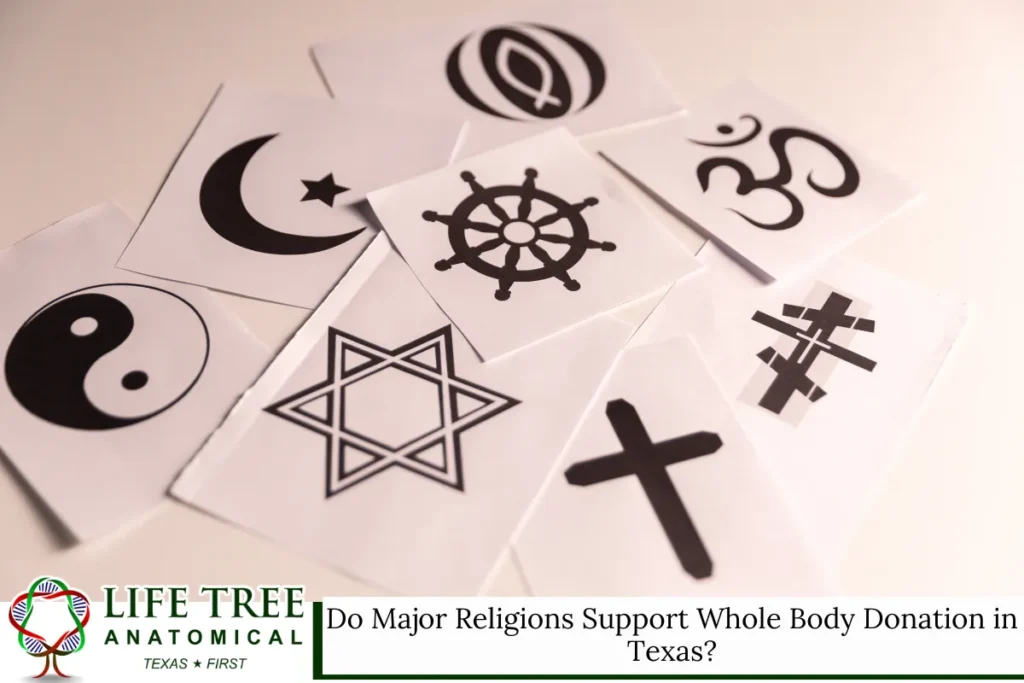
Religious Perspectives on Donation and Cremation
Many families hesitate because of faith traditions.
Christianity
Most major Christian denominations support organ and whole body donation as an act of charity. Cremation is widely accepted today, though burial remains traditional in some communities.
Judaism
Orthodox Judaism traditionally prefers burial and may discourage cremation. Families should consult religious authorities before making decisions.
Islam
Islamic law generally requires burial and discourages cremation. Donation may be permissible under certain interpretations.
Other Faith Traditions
Hinduism and Buddhism typically accept cremation and may view donation positively.
If religious burial is non-negotiable, families must carefully review donation program policies beforehand.
Read Donate Body to Science in Texas: What Happens if I Want to Donate My Body but Not My Eyes?
Financial Considerations: Burial vs. Cremation After Donation
One major reason Texans consider donating a body to science is cost.
Traditional funeral with burial can include:
- Embalming
- Casket
- Cemetery plot
- Headstone
- Funeral service
- Transportation
Costs can exceed $8,000–$12,000 or more.
By contrast, whole body donation programs often cover:
- Transportation
- Filing of death certificates
- Cremation
- Return of ashes
Families may only need to arrange a memorial service.
If cremated remains are buried later, families still pay cemetery-related expenses, but overall costs are significantly reduced.
Memorial Services Without the Body Present
Families sometimes worry that donation eliminates the opportunity for a meaningful farewell.
That is not the case.
Memorial services can occur:
- Before donation transport
- After cremated remains are returned
- Weeks or months later
Options include:
- Church services
- Celebration of life gatherings
- Military honors
- Ash interment ceremonies
The absence of the physical body does not prevent tribute or closure.
What Happens to Remains After Research Is Complete?
Once studies conclude:
- Remains are carefully gathered
- Cremation takes place
- Ashes are processed
- Families are notified
Some institutions:
- Return ashes to family
- Offer communal burial
- Hold annual memorial ceremonies honoring donors
These ceremonies often include medical students expressing gratitude, reinforcing the dignity of the gift.
How Long Does the Donation Process Take?
Duration varies.
In Texas, a whole body donation may last:
- Several weeks
- Several months
- Occasionally up to two years
Families should be prepared for a delay before receiving ashes.
Programs will provide time estimates during registration.
Important Questions to Ask Before Registering
Before enrolling in a willed body program, ask:
- Is cremation mandatory?
- Are ashes returned to family?
- Is burial of ashes permitted?
- Are there any fees?
- What conditions disqualify donation?
- What happens if the body is declined?
Clear communication prevents confusion later.
Emotional and Ethical Considerations
Donating a body to science is deeply generous. But families should talk openly.
Discuss:
- Religious values
- Burial expectations
- Memorial wishes
- Family concerns
Written documentation avoids disputes. Texas law honors documented donor intent, but communication helps prevent emotional distress.
Planning Ahead Makes the Difference
Advance registration simplifies everything.
Benefits of pre-planning:
- Legally documented consent
- Reduced family stress
- Clear instructions at time of death
- Financial clarity
Waiting until death occurs may limit options.
Final Thoughts on Burial After Whole Body Donation
Choosing to donate body to science in Texas is both generous and practical. While traditional full-body burial is generally not possible after anatomical study, cremated remains can absolutely be buried according to family wishes.
Texas law protects donor intent, ensures respectful handling, and regulates every step of the process. Families retain the ability to hold memorial services, inter cremated remains, and honor their loved one in meaningful ways.
The key is planning ahead, understanding program policies, and having open conversations.
A gift to medical science does not erase tradition. It simply reshapes it — combining legacy, learning, and remembrance.
Donate Body to Science in Texas – Life Tree Anatomical
At Life Tree Anatomical, we help families across Texas donate body to science with clarity and compassion. We understand the questions surrounding burial and cremation, and we take time to explain every step of the whole body donation process.
When you contact us, we guide you through registration, eligibility requirements, transportation coordination, and final disposition details. Our team ensures compliance with Texas law while treating every donor with dignity and respect.
We serve the entire state of Texas and are available when families need answers most. If you are considering donating a body to science or enrolling in a willed body program, call us at (512) 402-8533 or fill out our contact form today. We are here to make the process simple, transparent, and meaningful.
Frequently Asked Questions
Can a family override a registered body donation decision in Texas?
Under Texas law, if a person legally registers an anatomical gift before death, that decision is generally binding. The Uniform Anatomical Gift Act prioritizes documented donor intent. In most cases, family members cannot revoke the gift if proper consent exists. However, practical issues such as medical ineligibility may prevent acceptance. This is why clear communication with loved ones remains important. While the law protects the donor’s wishes, emotional disagreements can still arise, so discussing your decision ahead of time reduces the likelihood of conflict.
Are death certificates still issued if someone donates their body?
Yes. Donating a body to science does not prevent issuance of a death certificate. In Texas, the death certificate is filed in accordance with state law, typically by the funeral director or authorized representative coordinating transport. Families can obtain certified copies for legal, financial, and estate matters just as they would after a traditional burial or cremation. Donation programs often assist with paperwork coordination to ensure compliance with Texas Vital Statistics requirements.
Can someone pre-plan both body donation and a cemetery plot?
Yes, but families should understand how those plans interact. If a cemetery plot has already been purchased for traditional burial, it can still be used for cremated remains after donation. However, embalming and casket burial will not usually be possible after anatomical study. Some families choose to pre-purchase smaller urn plots or columbarium niches instead. Reviewing your cemetery contract ensures your arrangements align with donation policies.
Does donating a body affect life insurance or estate planning?
No. Whole body donation does not interfere with life insurance payouts, probate proceedings, or estate distribution. Insurance companies require a certified death certificate, not burial documentation. Because donation often reduces funeral costs, insurance proceeds may remain fully available for beneficiaries. However, it is wise to inform your estate attorney of your donation wishes so they can incorporate them into your broader planning documents.
Are there age limits for whole body donation in Texas?
Most programs do not set strict maximum age limits. Individuals in their 90s or even older may still qualify, provided they meet medical criteria at time of death. The primary considerations involve health conditions, infectious diseases, and body condition rather than age alone. Each willed body program has specific acceptance guidelines, so pre-registration and medical screening help clarify eligibility well in advance.
Disclaimer: This article is for informational purposes only and does not constitute legal, medical, or religious advice. Laws and program policies may change. Individuals should consult directly with a qualified whole body donation provider and review current Texas regulations before making final decisions.
Read Whole Body Donation in Texas: Are Ashes Mailed or Picked Up by the Family?